
Program detalis
3D Printing
3D Printing
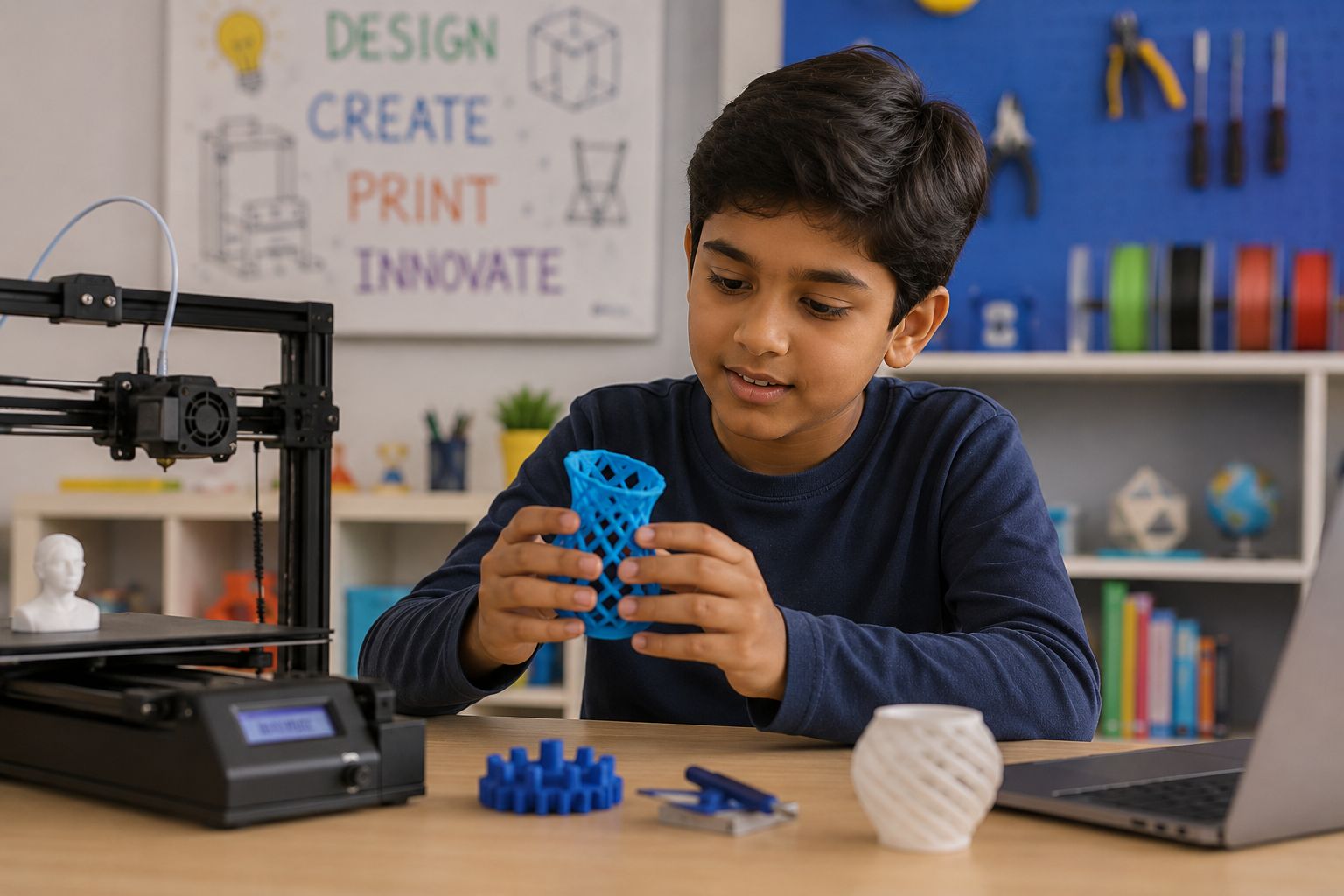
3D Printing helps children see how an idea becomes an object. They learn to think in form, function, and proportion as they move from a sketch or concept toward a model designed to be made real.
3D Printing helps children see how an idea becomes an object. They learn to think in form, function, and proportion as they move from a sketch or concept toward a model designed to be made real.
Start date:
Group size:
Big & Vibrant
Program type:
Full day
Age Range:
4–5 years old

Start date:
Group size:
Big & Vibrant
Program type:
Full day
Age Range:
4–5 years old
Program detalis
3D Printing
3D Printing helps children see how an idea becomes an object. They learn to think in form, function, and proportion as they move from a sketch or concept toward a model designed to be made real.
Start date:
Group size:
Big & Vibrant
Program type:
Full day
Age Range:
4–5 years old
Programme Overview
Many children have strong visual imaginations. 3D Printing gives those ideas a pathway into the physical world. Whether a learner is designing a useful object, a simple character, a model for a larger project, or a solution to a small everyday problem, they begin to understand how form and function come together.
The process is as important as the printed result. Children learn to observe the details of their own design, notice what may be difficult to make or use, and adjust their idea with purpose. This turns 3D printing into more than a novelty; it becomes a way to explore design, engineering, and patient problem-solving.
What Learners Explore
Learning Theme | Description |
From sketch to form | Children learn to translate a rough idea into a clearer shape with dimensions, purpose, and visual character. |
Designing for use | Learners consider who will use an object, what it should do, and how its form can support that purpose. |
Digital modelling | Through guided tools and age-appropriate workflows, children explore how digital shapes can become a printable model. |
Prototyping and refinement | Learners examine an early version, identify what can improve, and revise the design with greater clarity. |
How Learning Feels
3D Printing sessions feel like a blend of drawing, puzzle-solving, and invention. A child may start with a practical question—“How could I organise this?”, “What would make this easier to use?”, or “Can I turn this character into a model?”—and then discover how many decisions sit behind a simple object.
The mentor helps learners think in three dimensions: how an object looks from more than one side, how large it should be, where it needs strength, and what small change could improve the result. That way, the activity remains creative while developing a deeper sense of design responsibility.
Possible Project Directions
Useful desk objects · Character models · Creative tokens and collectibles · Simple solution prototypes · Parts for larger maker projects · Personalised design challenges
What This Programme Can Help Children Practise
Children have the opportunity to practise visual thinking, attention to proportion, creative problem-solving, patience with detail, and confidence in explaining their design choices. The finished model also gives them a tangible record of their learning process.
Parent Note
3D Printing is especially engaging for children who like drawing, building, crafts, model-making, architecture, or creating objects with a purpose. It offers an inviting entry point for learners who want to see their ideas become real.
Programme Overview
Many children have strong visual imaginations. 3D Printing gives those ideas a pathway into the physical world. Whether a learner is designing a useful object, a simple character, a model for a larger project, or a solution to a small everyday problem, they begin to understand how form and function come together.
The process is as important as the printed result. Children learn to observe the details of their own design, notice what may be difficult to make or use, and adjust their idea with purpose. This turns 3D printing into more than a novelty; it becomes a way to explore design, engineering, and patient problem-solving.
What Learners Explore
Learning Theme | Description |
From sketch to form | Children learn to translate a rough idea into a clearer shape with dimensions, purpose, and visual character. |
Designing for use | Learners consider who will use an object, what it should do, and how its form can support that purpose. |
Digital modelling | Through guided tools and age-appropriate workflows, children explore how digital shapes can become a printable model. |
Prototyping and refinement | Learners examine an early version, identify what can improve, and revise the design with greater clarity. |
How Learning Feels
3D Printing sessions feel like a blend of drawing, puzzle-solving, and invention. A child may start with a practical question—“How could I organise this?”, “What would make this easier to use?”, or “Can I turn this character into a model?”—and then discover how many decisions sit behind a simple object.
The mentor helps learners think in three dimensions: how an object looks from more than one side, how large it should be, where it needs strength, and what small change could improve the result. That way, the activity remains creative while developing a deeper sense of design responsibility.
Possible Project Directions
Useful desk objects · Character models · Creative tokens and collectibles · Simple solution prototypes · Parts for larger maker projects · Personalised design challenges
What This Programme Can Help Children Practise
Children have the opportunity to practise visual thinking, attention to proportion, creative problem-solving, patience with detail, and confidence in explaining their design choices. The finished model also gives them a tangible record of their learning process.
Parent Note
3D Printing is especially engaging for children who like drawing, building, crafts, model-making, architecture, or creating objects with a purpose. It offers an inviting entry point for learners who want to see their ideas become real.
Releted programs

Releted programs
Releted programs
Join our learning community today
Join our learning community today
Support your child’s growth with a nurturing environment designed for learning, creativity, and confidence.
Support your child’s growth with a nurturing environment designed for learning, creativity, and confidence.



Join our learning community today
Support your child’s growth with a nurturing environment designed for learning, creativity, and confidence.
